

NU-EMIとClimate Freskの取り組み
NU-EMIでは、G30国際プログラムにおける英語専門講義の受講を支援しています。しかし、G30の専門講義は英語レベルが高く、一般の学生には高いハードルに感じれる場合があります。そのため、語学力に差があっても参加者が充実感を得られるような、橋渡しとなる授業の開発が求められています。
そこで私たちが注目しているのが Climate Fresk です。
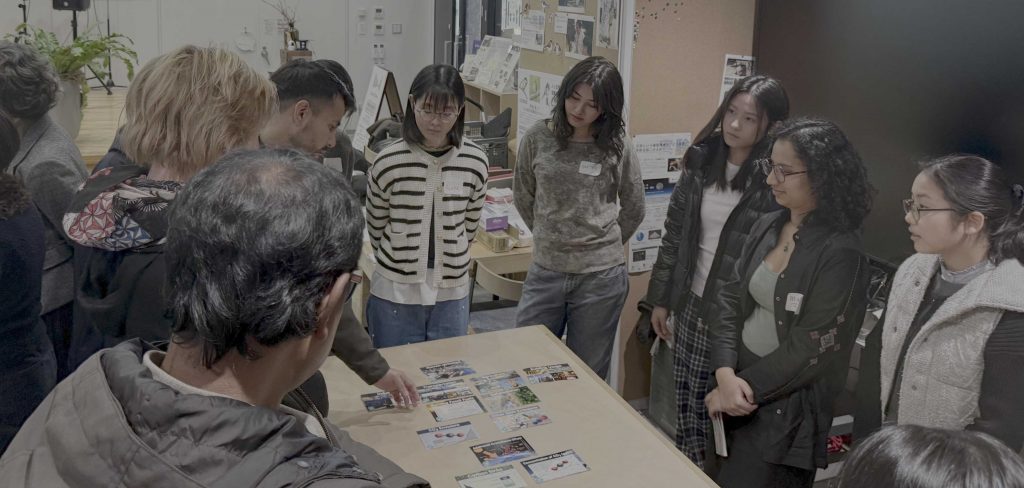
2026年3月8日(日)、名古屋大学において初めてClimate Freskを実施し、高校生、大学生、大学院生、教員など計28名が参加しました。
What is a Climate Fresk?
Climate Freskとは、グループでの共同作業を通して、気候変動の原因・影響・結果の関係性を整理し、全体像を一枚の関係図として構築するワークショップです。もともと、その成果として完成する図そのものが「Fresk」と呼ばれます。
Climate Freskの特徴
- 能動的な学び
従来の講義のように受動的に知識を得るのではなく、グループで議論しながら作業し、結果を発表するアクティブ・ラーニング型の活動です。
- 多様なレベルに対応
気候変動の全体像の理解を目的としているため、高校生から専門分野の大学院生まで、それぞれの知識レベルに応じた学びが得られます。異なる背景を持つ参加者同士でも、有意義な共同作業が可能です。
- 語学力の差を超えた学習
講義を聴くだけでなく、カードに書かれた情報を読み取り、議論しながら関係性を構築する「作業」が中心となります。そのため、コミュニケーションの工夫がしやすく、語学力の差による影響を受けにくいのが特徴です。英語力の異なる参加者でも、共に取り組みながら学びを深めることができます。
- 学び手から担い手へ
参加者は約3時間のワークショップを通して、Climate Freskの進行方法を学び、ファシリテーターとして活動するための基礎を身につけることができます。「学ぶ側」から「教える側」へと役割を広げることで、理解をさらに深めることができます。
ワークショップの概要
- 最大7名のグループに対して、1名のファシリテーターが学習をサポートします。
- 気候変動の原因・影響・結果を示す42枚のカードを5段階に分けて受け取り、約3時間でそれらの関係性を整理し、全体像を構築します。
- Climate Freskは2015年にフランスのCédric Ringenbachによって考案され、現在では世界中で230万人以上が参加しています。
参考リンク
- https://climatefresk.org/world/
- https://ichigobloom.jp/bloom/climatefresk/
- https://ichigobloom.jp/largest-climate-fresk-facilitator-training-in-japan-at-nagoya-university/
- https://ichigobloom.jp/wp-content/uploads/2025/04/Ichigo-Bloom-Climate-Fresk-One-Pager-ENJP.pdf
NU-EMI and Climate Fresk
NU-EMI supports students in taking English-taught specialized courses in the G30 International Program. However, the level of English required in these courses is quite high, making preparatory learning an important step. We therefore see a strong need to develop bridge-style learning opportunities where participants with different levels of English proficiency can all engage meaningfully and feel a sense of achievement.
One approach we recommend is Climate Fresk.
On March 8, 2026, we held our first Climate Fresk workshop at Nagoya University, with a total of 28 participants, including high school students, undergraduate students, graduate students, and faculty members.
What is a Climate Fresk?
Climate Fresk is a collaborative workshop in which participants work together to understand the overall structure of climate change by organizing the relationships between its causes, effects, and consequences. Through this process, they create a large visual map that represents these interconnected relationships. The term “Fresk” refers both to the workshop itself and to the completed visual map.
Key Features of Climate Fresk
- Active learning
Rather than passively receiving information as in traditional lectures, participants engage in group discussions, collaborative tasks, and presentations—making it a highly interactive learning experience.
- Accessible across knowledge levels
Because the goal is to understand the overall system of climate change, the workshop is effective for a wide range of participants—from high school students to graduate students specializing in environmental studies. People from diverse backgrounds can work together and still gain meaningful insights at their own level.
- Less dependent on language proficiency
The workshop centers on reading information from cards, discussing their relationships, and arranging them into a coherent structure. This task-based approach allows for flexible communication and reduces the impact of differences in language ability, making it easier for participants with varying levels of English to collaborate and feel equally engaged.
- From learner to facilitator
Through the three-hour workshop, participants also learn how the activity is conducted and can develop the skills needed to facilitate future sessions themselves. This transition from “learner” to “facilitator” deepens their understanding of climate change and enhances their ability to communicate it to others.
Workshop Overview
- Each group consists of up to seven participants, supported by a facilitator.
- Participants receive a total of 42 cards in five stages and work over approximately three hours to identify relationships and construct a comprehensive view of the climate system.
- Climate Fresk was created in 2015 by Cédric Ringenbach in France, and more than 3 million people worldwide have participated to date.